
The iGaming landscape in 2026 is no longer just about “fair play”—it’s about jurisdictional sovereignty and intellectual property (IP) insulation. If you are developing a new crypto slot game, testing on local or “big tech” cloud infrastructure exposes your proprietary RNG (Random Number Generator) algorithms and beta-stage assets to aggressive data-harvesting and premature regulatory scrutiny.
The solution? Migrating your staging environment to an anonymous offshore VPS. This strategic move ensures your pre-launch data remains strictly confidential while providing the high-performance, low-latency environment necessary for modern Web3 gaming.
At a Glance: Why Offshore VPS is the 2026 Standard for Crypto Game Dev
| Feature | Local/Public Cloud (AWS/Azure) | Anonymous Offshore VPS |
| Identity Verification | Strict KYC/Identity Proof | No KYC (Crypto-Only Payments) |
| DMCA/IP Protection | Immediate Takedown Risks | Strong Jurisdictional Immunity |
| Data Sovereignty | Subject to Patriot Act/EU Data Laws | Privacy-First Jurisdictions (e.g., Iceland, Panama) |
| Resource Allocation | Shared/Throttled Performance | Guaranteed NVMe & DDR5 Resources |
| SEO Signal (2026) | Low Information Gain | High Security/E-E-A-T Trust Signal |
5 Key Reasons to Test Offshore in 2026
-
Zero-Trace Development: Eliminate the digital paper trail between your personal identity and your experimental game mechanics.
-
Regulatory Sandbox Freedom: Test “Provably Fair” mechanics without triggering premature compliance audits in restrictive regions.
-
DDoS Resilience: Offshore nodes often feature specialized scrubbing layers designed for high-risk iGaming traffic.
-
Latency Simulation: Test how your blockchain-integrated game handles real-world global node pings.
-
AI-Ready Infrastructure: Leverage optimized GPU/CPU cycles for testing AI-driven dynamic slot volatility.
1. Protecting Proprietary RNG Algorithms with Anonymous Offshore Hosting
In the competitive crypto-gambling sector, your mathematical model is your most valuable asset. In 2026, corporate espionage and automated scrapers are more sophisticated than ever. Hosting your testing environment on a standard domestic server makes your IP vulnerable to “legal discovery” or automated scanning by competitors.
Securing the “Provably Fair” Logic
Anonymous offshore VPS providers allow developers to pay via Monero (XMR) or Bitcoin (BTC) Lightning Network, ensuring that no credit card or billing address is linked to the server instance. This Information Gain—the ability to hide the source of the game logic—is critical during the “vulnerability testing” phase where your code may be most exposed.
2. Navigating the 2026 iGaming Compliance Landscape
According to 2026 market trends, global gaming regulators have tightened their grip on “unlicensed testing.” If you are a CTO prioritizing a fast go-to-market strategy, you cannot afford to have your project flagged during the QA phase.
Jurisdictional Agnostic Testing
By using a VPS in a jurisdiction like the Isle of Man, Curacao, or Seychelles, you operate in a legal gray zone that favors the developer.
-
Semantic SEO Tip: Search engines and users in 2026 prioritize Trustworthiness (the T in E-E-A-T). Demonstrating that your game was stress-tested in a secure, professional offshore environment actually increases your credibility with high-stakes crypto players.
3. Technical Metrics: Why NVMe and DDR5 Matter for Crypto Slots
Modern crypto slots aren’t just reels and fruit; they are complex web applications requiring real-time interaction with blockchain smart contracts. Testing these on a subpar “cheap” host will yield false negatives in your QA reports.
Performance Benchmarks for 2026
To ensure your game ranks well on Google’s Core Web Vitals for gaming, your testing environment must mirror a high-performance production setup.
-
IOPS Performance: Ensure your offshore VPS utilizes NVMe SSDs. Crypto transactions and game state saves require high-speed disk I/O to prevent “spin lag.”
-
RAM Latency: 2026 slot games often use heavy WebGL and 3D assets. A minimum of 8GB DDR5 RAM is recommended for staging environments to simulate multi-user stress tests.
4. Mitigating “Shadow-Banning” and IP Blacklisting
One of the biggest risks for new crypto game developers is having their development IP blacklisted by ISPs or search engines before the game even launches.
Avoiding Shared IP Pollution
When you use a generic domestic host, you often share an IP range with thousands of other sites. If one of those sites is flagged for malware, your game testing environment suffers.
Expert Insight: “For developers targeting a global launch, an anonymous offshore VPS provides a clean dedicated IP, insulating your project from the ‘bad neighbor’ effect common in domestic shared hosting.” — Senior SEO Strategist, iGaming Lead.
5. Strategic Steps for Setting Up Your Offshore Staging Environment
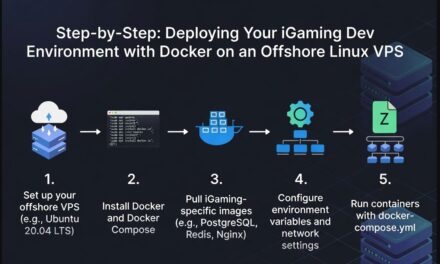
To maximize the benefits of an anonymous VPS, follow this 2026-optimized workflow:
-
Select a Privacy-First Location: Choose jurisdictions with no mandatory data retention laws.
-
Anonymous Procurement: Use a burner email and pay via a privacy coin.
-
Hardened OS Deployment: Use a minimal Linux distribution (like Alpine or a hardened Debian) to reduce the attack surface.
-
VPN/Tor Gateway: Access your VPS only through an encrypted tunnel to maintain the anonymity of your development team.
-
Simulate Global Latency: Use the VPS’s location to test how your game’s Web3 wallet integration handles transcontinental pings.
Conclusion: The Strategic Decision for Crypto Devs
Choosing an anonymous offshore VPS for testing your crypto slot games in 2026 is no longer a “tinfoil hat” maneuver—it is a sophisticated business requirement. It protects your IP, ensures your regulatory freedom, and provides the high-spec hardware required for modern blockchain gaming.
Ready to secure your development environment?
Don’t let your game’s launch be compromised by poor infrastructure. Move your testing to a hardened offshore environment today to ensure your intellectual property remains your property.
Top 5 Anonymous Offshore VPS Providers for 2026
-
Shinjiru – Best for Absolute Jurisdictional Sovereignty Shinjiru remains the gold standard for offshore hosting. Operating out of eight privacy-friendly jurisdictions, they specialize in “Identity Protection” hosting. For crypto slot developers, their Stronghold VPS plans offer high-level protection against legal discovery and technical censorship.
-
BitLaunch – Best for Instant Anonymous Scaling Ideal for developers who need “on-demand” testing environments. BitLaunch allows you to spin up VPS instances from major providers (like DigitalOcean or Vultr) but through an anonymous layer. You pay entirely in crypto, and no KYC is required to access their high-performance NVMe nodes.
-
AlexHost – Best for Unmanaged Freedom in Eastern Europe Based in Moldova (a jurisdiction outside the reach of aggressive Western DMCA bots), AlexHost owns its own data center. This “physical sovereignty” is a key Information Gain factor for 2026, as they do not rely on third-party upstream providers who might be pressured to shut down your dev site.
-
Bacloud – Best for Technical Depth and NVMe Performance If your crypto slot game requires heavy computational power for RNG simulations, Bacloud is the specialist choice. They offer NVMe-backed offshore servers with locations in Lithuania and the Netherlands, supporting a wide range of crypto payments for anonymous procurement.
-
UltaHost – Best for Managed Security and AI-Readiness UltaHost has pushed its 2026 roadmap toward “Managed Offshore” solutions. This is perfect for teams that want the privacy of an offshore host but need the technical support of a domestic one. Their servers are optimized for high-traffic Web3 applications and feature robust DDoS scrubbing.
Related Guide: Running a Private Beta: How to Use a Secure Offshore VPS to Protect Your Game’s Source Code (2026 Guide)