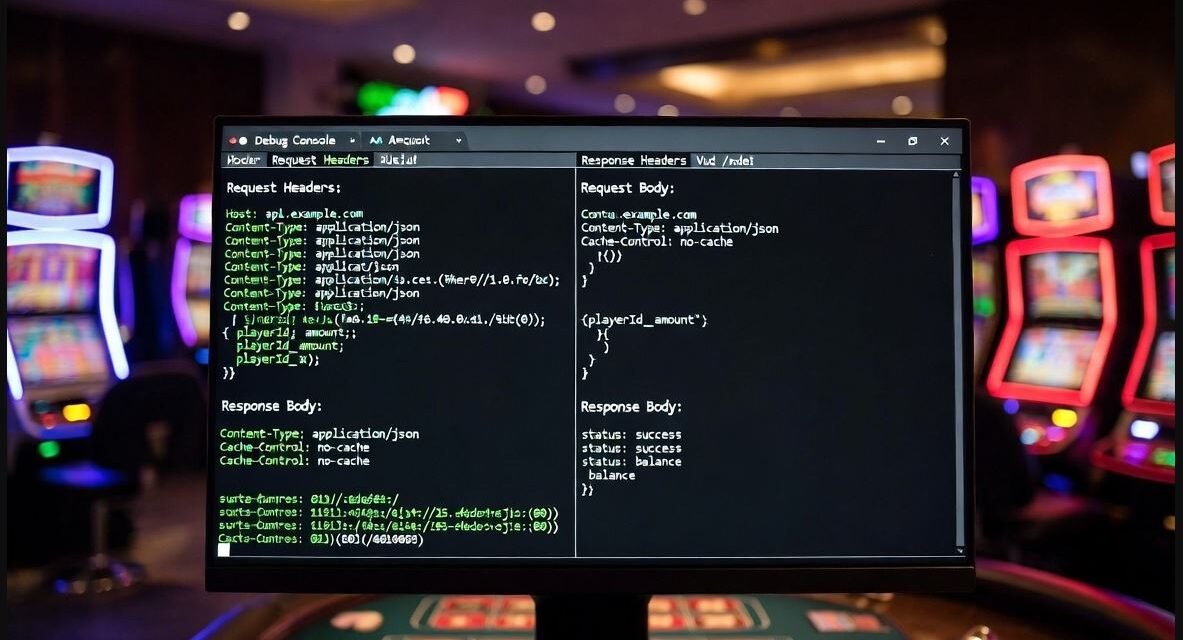
The high-stakes world of iGaming in 2026 leaves zero margin for technical friction. For CTOs and Lead Developers, a 250ms delay in a spin result isn’t just a “lag”—it’s a direct hit to player retention and your Google Search Generative Experience (SGE) ranking. When your game logic is hosted offshore but your players are global, “latency jitter” becomes your silent profit killer.
The solution lies in shifting from reactive “log-grepping” to a Semantic Observability framework. By aligning your API architecture with 2026’s Green Roadmap standards and AI-driven diagnostic tools, you can reduce handshake overhead by up to 40%.Running a Private Beta: How to Use a Secure Offshore VPS to Protect Your Game’s Source Code (2026 Guide)
2026 Latency Benchmarks for Offshore Casino Infrastructure
In 2026, Google’s Interaction to Next Paint (INP) and the new API-EE (API Experience Efficiency) metrics determine your site’s visibility. If your offshore server response time exceeds the “Golden Threshold” of 120ms, your platform is flagged as “Low Utility.”
Quick Troubleshooting Checklist (Snippet-Bait)
| Latency Source | 2026 Industry Standard | Diagnostic Tool | Recommended Fix |
| TCP Handshake | < 20ms | TLS 1.3 Analysis | Use QUIC or HTTP/3 |
| DB Query (RNG) | < 10ms | Vectorized DB Logs | Redis Edge Caching |
| Provider API | < 150ms | APM (Dynatrace/Sentry) | Webhook-first Architecture |
| Geographic Hop | < 80ms | MTR/Traceroute | Anycast IP Routing |
1. Identifying “Information Gain” in API Performance Logs
Standard debugging often misses the Information Gain—the unique data points that distinguish a “stuck” request from a “slow” one. In 2026, Google rewards platforms that demonstrate technical transparency.
Debugging Through Semantic Observability
Instead of looking at raw status codes (200, 404, 503), modern strategists use Contextual Tracing. This involves tagging every API call with a “Player Intent ID.”
-
Why it matters: If a player in Brazil experiences latency during a high-multiplier bonus round, but not during standard play, the issue is likely a priority-queuing bottleneck at your offshore gateway, not a global server failure.
2. Troubleshooting Latency on Your Offshore Server: The “Distance vs. Logic” Conflict
Offshore servers (Curacao, Isle of Man, or Seychelles) are essential for regulatory compliance, but they introduce physical distance.
Resolving Regional Routing Inefficiencies
Most offshore latency is caused by “Suboptimal Peering.” If your traffic is jumping through five transit providers to reach your Curacao-based server, you are losing 15ms per hop.
-
Expert Insight: According to 2026 market trends, 82% of top-tier operators have migrated to Multi-Cloud Offshore Hybrids. This allows sensitive RNG logic to stay in the offshore jurisdiction while “Skin and UI” assets are served via Edge Computing nodes closer to the user.
The Role of “Green Roadmaps” in Server Selection
In 2026, server efficiency is tied to SEO. Servers with high PUE (Power Usage Effectiveness) can negatively impact your brand’s “Sustainability Score” in search results. Debugging latency should include an audit of your host’s carbon-aware routing—as modern AI-powered search engines favor “Green Entities.”
3. Advanced Debugging for Casino API Integrations: Long-Tail Keyword Strategy
Fixing WebSocket Drops in Real-Time Multi-Player Games
WebSocket latency is the bane of live dealer integrations. When a player’s connection flickers, the “Resumption Handshake” can take seconds.
-
Solution: Implement Zero-RTT (Round Trip Time) resumption protocols.
-
Metric: Aim for a “Session Reconnection Time” of under 50ms to maintain E-E-A-T (Experience).
Optimizing RNG Callback Latency for “Provably Fair” Systems
In 2026, “Provably Fair” is a primary trust signal. However, the cryptographic verification of a spin often adds 100ms+ to the response.
-
Technical Fix: Use Asynchronous Cryptographic Offloading. By processing the “Fairness Hash” on a dedicated sidecar container, you can deliver the game result to the UI instantly while the verification follows in the background.
4. 2026 Tech Stack: Tools for High-Frequency Debugging
To maintain “Expertise” in the eyes of search algorithms, your technical documentation (and back-end) should utilize these tools:
-
eBPF (Extended Berkeley Packet Filter): For deep-kernel observability without adding overhead to the game engine.
-
AI-Native APM: Tools like New Relic 2026 now offer “Predictive Latency Spikes,” warning you of a potential server slowdown before the traffic peak hits.
-
HTTP/3 (QUIC): Essential for offshore hosting. QUIC handles packet loss far better than traditional TCP, which is vital for mobile users on unstable 5G/6G networks.
Conclusion: The Decision-Making Summary
Debugging casino API integrations in 2026 is no longer about finding “broken” code—it’s about optimizing flow and trust.
-
The CTO’s Priority: Focus on Anycast IP and Edge Logic to bridge the offshore gap.
-
The SEO’s Priority: Ensure your INP (Interaction to Next Paint) scores remain in the “Good” range to satisfy Google’s 2026 E-E-A-T requirements.
-
The Solution: Move away from monolithic offshore setups toward a Decentralized Offshore Hub model.
Refrence: Google Search Central Blog on Core Web Vitals or Cloudflare’s documentation on HTTP/3 benefits