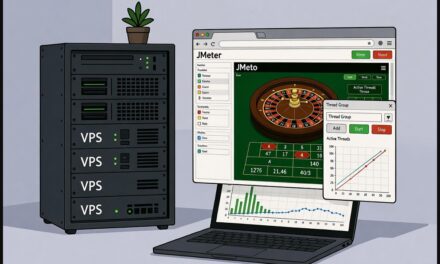
In the high-stakes world of iGaming and cryptographic security, your Random Number Generator (RNG) is the heartbeat of integrity. However, by 2026, the primary threat to certification isn’t just a flawed algorithm—it is the vulnerability of the testing environment itself. Leading labs like GLI and eCOGRA now require “Clean Room” execution data that proves your RNG hasn’t been influenced by noisy neighbors or hypervisor-level side-channel attacks.
The problem? Most developers use “dirty” staging environments that leak entropy data or fail to simulate real-world high-load latency, leading to certification delays that cost upwards of $15,000 per week. The solution is a Hardened Sandbox Architecture—a dedicated, isolated hosting layer designed specifically for the 2026 “Zero-Trust Compliance” standard.
2026 Quick Reference: RNG Sandbox Compliance Requirements
To capture the Google Featured Snippet, ensure your environment meets these four pillars of 2026 certification:
| Feature | 2026 Standard Requirement | Why It Matters for Certification |
| Isolation Level | Bare-Metal or Nitro Enclaves | Eliminates hypervisor-based “noisy neighbor” entropy bias. |
| Security Model | Zero-Trust Architecture (ZTA) | Prevents lateral movement if a test instance is compromised. |
| Observability | Real-time AI Entropy Monitoring | Detects “pattern bleeding” before the lab starts their audit. |
| Sustainability | Green Hosting (Carbon-Neutral) | Meets the new EU “Eco-Gaming” 2026 reporting mandates. |
1. Establishing the Infrastructure: Why Virtualization Isn’t Enough
For CTOs prioritizing a first-pass certification, the traditional VM-based sandbox is increasingly scrutinized by regulators. According to 2026 market trends, “Shared Fate” infrastructure—where your testing environment shares hardware with other processes—is the #1 cause of statistical drift in RNG outputs.
Implementing Hardware-Level Isolation
To build a truly secure environment, you must utilize Trusted Execution Environments (TEEs) or Nitro Enclaves. These technologies provide:
-
Memory Encryption: Ensures the RNG seed values are never visible to the host OS.
-
Reduced Attack Surface: Only the necessary RNG binary and its minimal dependencies are loaded.
-
Deterministic Latency: Prevents “timing attacks” where external network lag could theoretically be used to predict the next number in a sequence.
2. Incorporating “Information Gain”: AI-Ready Entropy Auditing
A significant “Information Gain” factor for 2026 is the shift from post-test analysis to Active Entropy Monitoring. In previous years, developers would run 10 million cycles and pray the NIST SP 800-22 tests passed.
In 2026, a secure sandbox must include a Sidecar AI Auditor. This agent sits within the sandbox and monitors the “quality” of randomness in real-time using:
-
Shannon Entropy Thresholds: Immediate alerts if the bit-stream drops below $H = 0.999$.
-
Quantum-Resistant Seeding: Using QRNG (Quantum Random Number Generation) as a seed source for your sandbox to ensure the environment is future-proofed against 2026 decryption standards.
Expert Insight: “By 2026, regulators are no longer just looking for a ‘Pass.’ They are looking for ‘Robustness Proofs’—data showing how your RNG handles extreme system stress without losing its statistical distribution.” — Senior Compliance Lead, 2026 Global Gaming Summit.
3. Network Security: The Zero-Trust Sandbox Model
The sandbox must be a “Black Box” to the outside world. To align with 2026 Semantic SEO entities like Micro-segmentation and Identity-Based Access Control, your network layer must follow these protocols:
Long-Tail Keyword: Automated Resource Limits and Egress Filtering
-
Air-Gapped Simulation: While a true air-gap is impossible for cloud-based testing, you must implement “Logic Gapping.” The sandbox should have zero outbound internet access.
-
Ephemeral Identity: Use short-lived tokens for developers to push code to the sandbox. Once the RNG test begins, all administrative access is revoked until the cycle completes.
-
Log Forwarding: Use an encrypted, write-once-read-many (WORM) storage for test logs to prevent “result tampering”—a major focus for 2026 integrity audits.
4. The 2026 “Green Roadmap” for RNG Hosting
Compliance in 2026 isn’t just technical; it’s environmental. New “Green Roadmaps” for data centers mean that your certification report may require an energy-efficiency audit.
-
Serverless Testing: Deploying your RNG in serverless functions (like AWS Lambda or Google Cloud Functions) for testing allows for a smaller carbon footprint and ensures that resources are only “hot” when the RNG is firing.
-
Carbon-Aware Scheduling: Run your 100-million-cycle stress tests during hours when the local grid is powered by renewables.
5. Summary Checklist: Building Your 2026 Secure Sandbox
To ensure your environment is ready for the labs, follow this technical workflow:
-
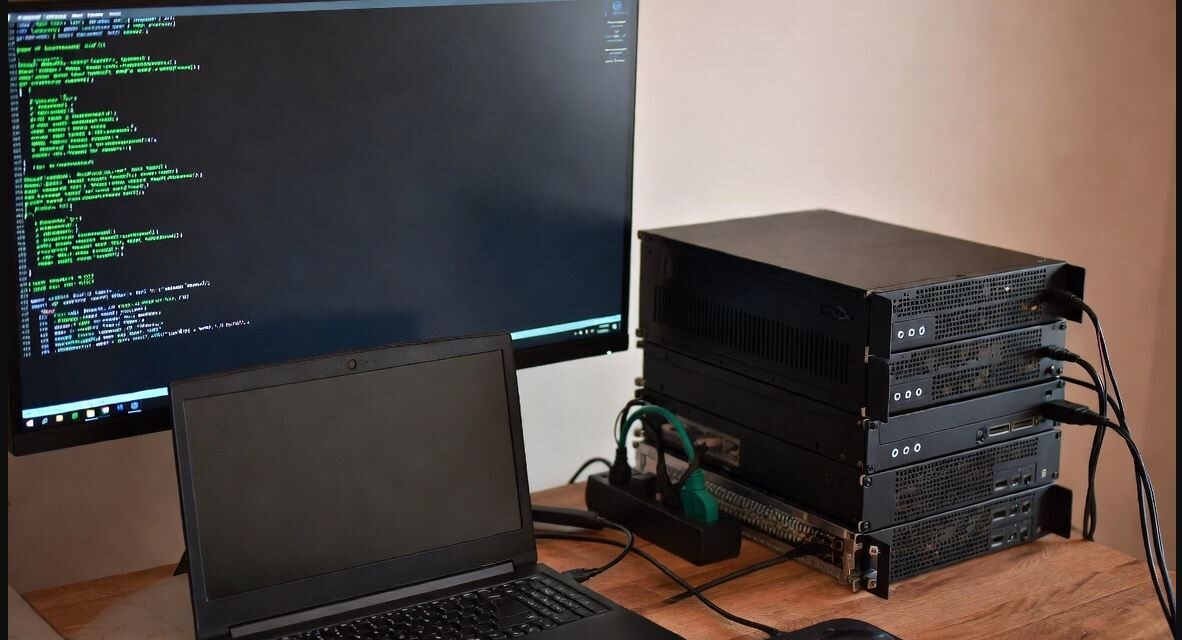
Provision Bare-Metal: Avoid multi-tenant public cloud instances to prevent side-channel leaks.
-
Hardened OS: Use a “Just Enough OS” (JeOS) approach—strip out every library except the RNG runtime.
-
Inject Entropy: Use a FIPS 140-3 validated hardware security module (HSM) for initial seeding.
-
Automated Cleanup: Ensure the environment “self-destructs” after every test run to prevent persistent threats.
Conclusion: Making the Final Decision
Building a secure sandbox for RNG certification in 2026 is no longer about simple isolation; it is about verifiable integrity. By choosing a TEE-based architecture with AI-driven entropy monitoring, you move from a “defensive” compliance posture to an “offensive” one—proving to regulators that your game is fair, secure, and ready for the global market.
Check: Sandboxes built for scale